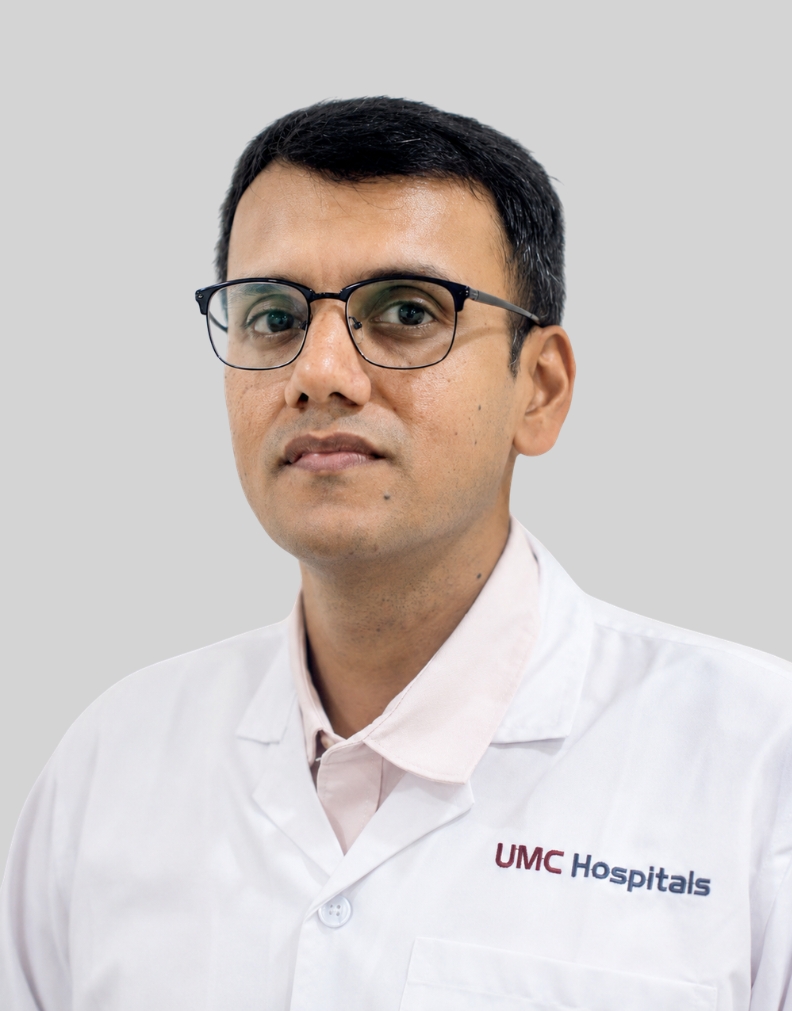
General Surgery at UMC Hospitals, Navi Mumbai
UMC Hospitals - one of the top general surgery hospitals in Navi Mumbai provides - comprehensive, consultant-led General Surgery care for elective and emergency conditions, combining minimally invasive techniques with enhanced recovery pathways for safer procedures and faster return to routine.
Conditions We Treat
-
Gallbladder and Biliary
Gallstones, cholecystitis, and biliary colic, including complex cases requiring careful pre-procedural planning and follow-up.
-
Appendix
Acute appendicitis and its complications, managed with prompt assessment and minimally invasive intervention where appropriate.
-
Hernias
Inguinal, umbilical, ventral, incisional, and recurrent hernias are evaluated individually with a repair approach tailored to anatomy and patient factors.
-
Proctology
Hemorrhoids (piles), anal fissure, fistula-in-ano, and pilonidal sinus, managed through a structured pathway from symptom assessment to procedure and recovery.
-
Colorectal
Diverticular disease, benign polyps, and colorectal cancer with multidisciplinary coordination for staging and treatment planning.
-
Endocrine Surgery
Thyroid nodules and goiter, hyperparathyroidism, and adrenal lesions, assessed and managed in coordination with endocrinology.
-
Breast Surgery
Benign lumps, fibroadenoma, and breast infections or abscesses; breast cancer pathways managed with oncology from diagnosis through surgery.
-
Skin and Soft Tissue
Epidermal cysts, lipomas, abscesses, and chronic or non-healing wounds requiring surgical management.
-
Trauma and Emergencies
Acute abdomen, hollow viscus perforation, intestinal obstruction, gastrointestinal bleeding, and soft-tissue injuries requiring urgent surgical assessment and intervention.
Procedures Offered
Gallbladder and Appendix
-
Laparoscopic cholecystectomy with rapid recovery protocols
-
Laparoscopic appendectomy for acute and interval cases
Hernia Repair
-
Laparoscopic TEP and TAPP for inguinal hernias
-
Open mesh repair for primary and recurrent cases
-
Complex and redo hernia solutions for incisional and multiply recurrent defects
Proctology
-
Hemorrhoidectomy and minimally invasive procedure for hemorrhoids (MIPH/stapled)
-
Laser hemorrhoidoplasty for selected grades
-
Fissure surgery and chemical sphincterotomy were indicated
-
Fistula procedures, including LIFT and laser-assisted fistula treatment (LAFT)
Colorectal Surgery
-
Colonic and rectal resections with oncologic principles and stapled anastomosis, where indicated
-
Endoscopic polypectomy coordination and surgical management of polyp-related complications
Endocrine Surgery
-
Hemithyroidectomy, total thyroidectomy, and completion thyroidectomy with nerve monitoring support
-
Parathyroid surgery for primary and secondary hyperparathyroidism
-
Adrenal surgery in selected cases
Breast Surgery
-
Wide local excision and lumpectomy
-
Mastectomy with oncoplastic considerations
-
Sentinel lymph node biopsy and axillary clearance as indicated
-
Reconstructive referrals coordinated with plastic surgery
Minor and Day-Care Surgery
-
Cyst and lipoma excision, abscess incision, and drainage
-
Wound debridement and chronic wound management
-
Varicose vein laser treatment for selected cases
Technology and Safety
Procedures at UMC Hospitals are performed using high-definition laparoscopy towers, advanced energy devices, and precision stapling systems. Ultrasound and CT-guided decision-making is supported by on-site diagnostics, blood bank access, and real-time ICU backup for complex cases. WHO Surgical Safety Checklist compliance, infection-control protocols, antibiotic stewardship, and anticoagulation management are built into every care pathway.
Specialized Care Areas
-
Minimally Invasive Surgery
Where clinically appropriate, minimally invasive approaches are prioritized. Laparoscopic and single-incision techniques reduce scar size, postoperative pain, and recovery time. Laser-assisted options are available for selected hemorrhoid and fistula cases, minimizing discomfort and enabling faster return to routine. Precision is supported through image-guided planning, stapler-assisted techniques, and advanced energy devices, all aimed at efficient, safe surgery with the least possible impact on surrounding tissue.
-
Emergency Surgical Care
Round-the-clock surgical coverage is available for acute abdomen, trauma, hollow viscus perforation, intestinal obstruction, strangulated hernia, and infected collections. Fast-track triage, imaging review, and operative intervention are supported by ICU backup and a multidisciplinary team.
-
Day-Care and ERAS Pathways
Many laparoscopic and endoscopic-assisted procedures at UMC Hospitals are performed as day-care, with same-day discharge for suitable patients. Enhanced Recovery After Surgery (ERAS) protocols guide each pathway, emphasizing multimodal analgesia, nausea control, early feeding, and mobilization to reduce complications and shorten hospital stay.
The Care Journey
The first consultation typically involves a detailed history and a focused clinical examination. Findings are discussed openly - what has been identified, what further investigation is needed, and where a procedure may be appropriate. Treatment options are explained with expected timelines, benefits, and risks. Follow-up after surgery matters as much as the procedure itself. Bringing prior imaging (ultrasound, CT), laboratory reports, endoscopy notes, and a current medication list - including blood thinners and supplements- to the first visit helps the team plan accurately. Noting symptom duration, prior surgical history, and any known allergies or bleeding tendencies adds useful context.
Why Choose UMC Hospitals for General Surgery
Our general surgery specialists in Navi Mumbai are committed to providing advanced surgical care at UMC Hospitals. We offer:
-
Consultant surgeons with subspecialty expertise across laparoscopic surgery, proctology, colorectal surgery, endocrine surgery, and breast surgery
-
Preference for minimally invasive and laser-assisted techniques, supporting less pain, smaller scars, and faster recovery
-
Integrated care with anesthesiology, intensive care, radiology, oncology, endocrinology, dietetics, physiotherapy, and specialized nursing as one coordinated team
-
Coordinated insurance assistance, cost transparency, and personalized care planning from the first visit
FAQs
-
Are procedures minimally invasive?
When clinically appropriate, minimally invasive options are prioritized. Most gallbladder, appendix, and hernia procedures are performed laparoscopically, and laser-assisted options are available for selected cases in proctology.
-
How long is the hospital stay?
Many laparoscopic procedures result in discharge within one to two days. Day-care procedures, including minor excisions and selected proctology surgeries, allow same-day discharge for suitable patients.
-
When can normal work resume?
Desk work often resumes within three to seven days after laparoscopy. Open or more complex procedures may require two to three weeks, depending on the extent of surgery and individual recovery.
-
Will there be significant pain after surgery?
Multimodal pain control, nerve-sparing techniques, and ERAS protocols are designed to keep postoperative discomfort low and manageable. Most patients report better pain control than anticipated.
-
What about surgical scars?
Laparoscopic surgery uses small incisions, typically less than one centimetre. Scar care advice and sun protection guidance are provided at discharge to support the best possible cosmetic outcome.
-
Is surgery safe with other medical conditions?
Pre-operative optimization with cardiology, pulmonology, endocrinology, and anesthesiology improves safety for patients with comorbidities. Complex cases are assessed in a multidisciplinary setting before proceeding.
Book an Appointment
To consult our general surgery specialists in Navi Mumbai or seek a second opinion at UMC Hospitals, request a call-back or schedule a visit. Our care team will coordinate evaluation, preparation, and next steps, tailored to your clinical needs and treatment goals.